Follow a real PM through their day. This is what Documint PM looks like when drift hits, documents need answers, and margin is on the line.
Based on a real POC project, $70M MEP build, 14 active trades
You haven't left the house yet. Coffee's still brewing. DPM scanned 14,847 data points across your project while you slept. At 3:42 AM, it found a problem nobody on the team has seen yet.
Used to be radio and coffee. The thirty-minute drive to the job was windshield time, non-productive by default. Now you turn off your street and open a voice chat with DPM. TIA walks you through every active scope and the latest projections. She emails the most recent three-week lookahead to your phone. She reminds you of the deliverable you owe today's BIM coordination meeting at 11, and the three deliverables for the foreman's meeting at 2, the one you have to cover because Carl is on another site. You ask her to summarize yesterday's coordination meeting and last week's pull plan. She offers to draft a memo with the action items and email it to the team, holding for your sign-off before anything sends. All chats are logged.
TIA is the intelligence inside DPM. She is what you interact with. PhD-level command of your project. Access to every data point you shared with the project file, every email, every message, every field reality. She is your cognitive assistant. She drafts the documents. She tracks every deliverable. You ask. She answers. No digging through folders. No calling the office.
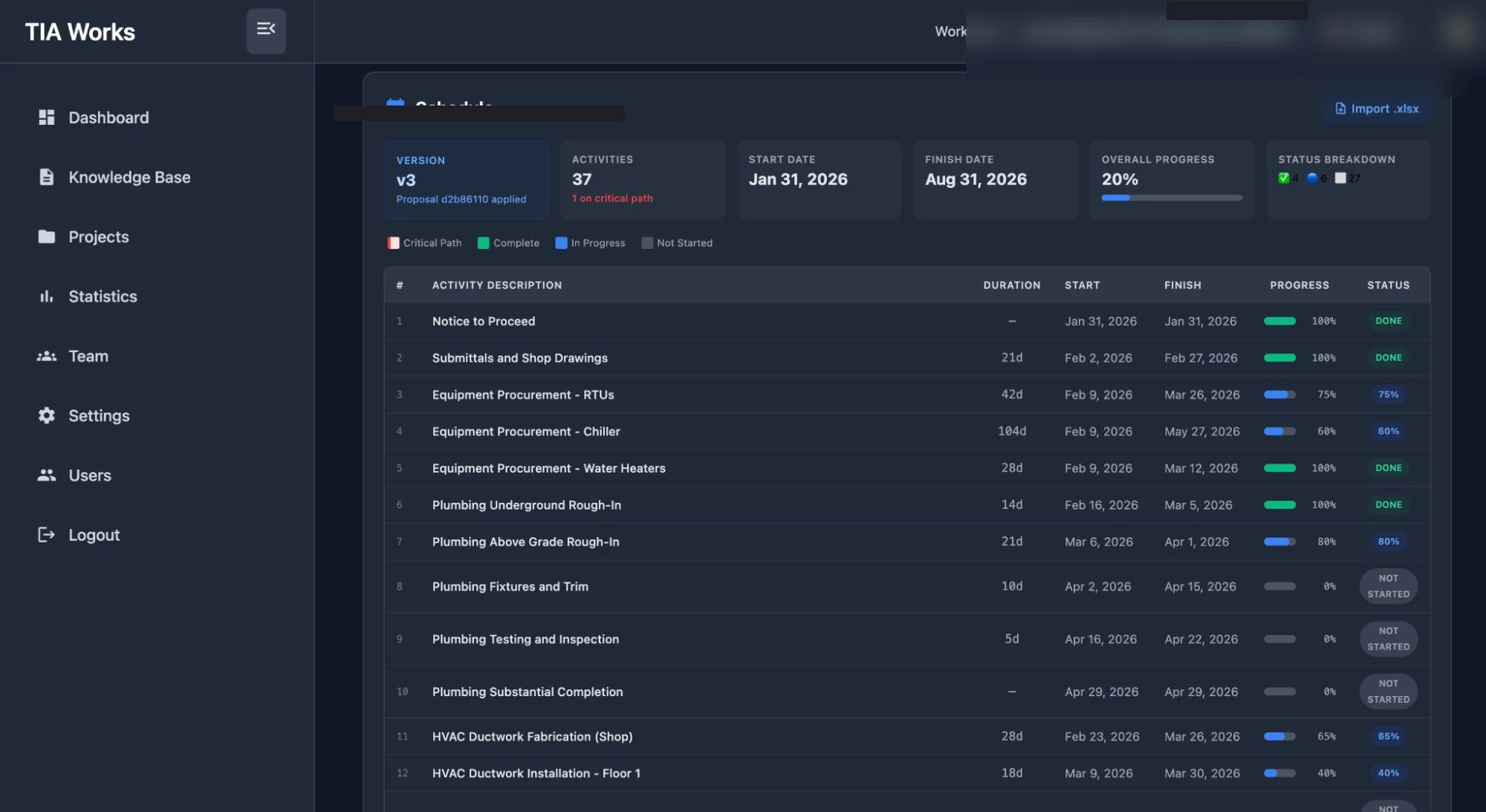
Thirty minutes ago, this was radio and coffee. Now your to-do list is clear, the memo is drafted and awaiting your sign-off, the three-week lookahead is in your inbox, and you know exactly what you owe three different meetings before the day is over. The non-productive hour just became the most productive hour of your week.
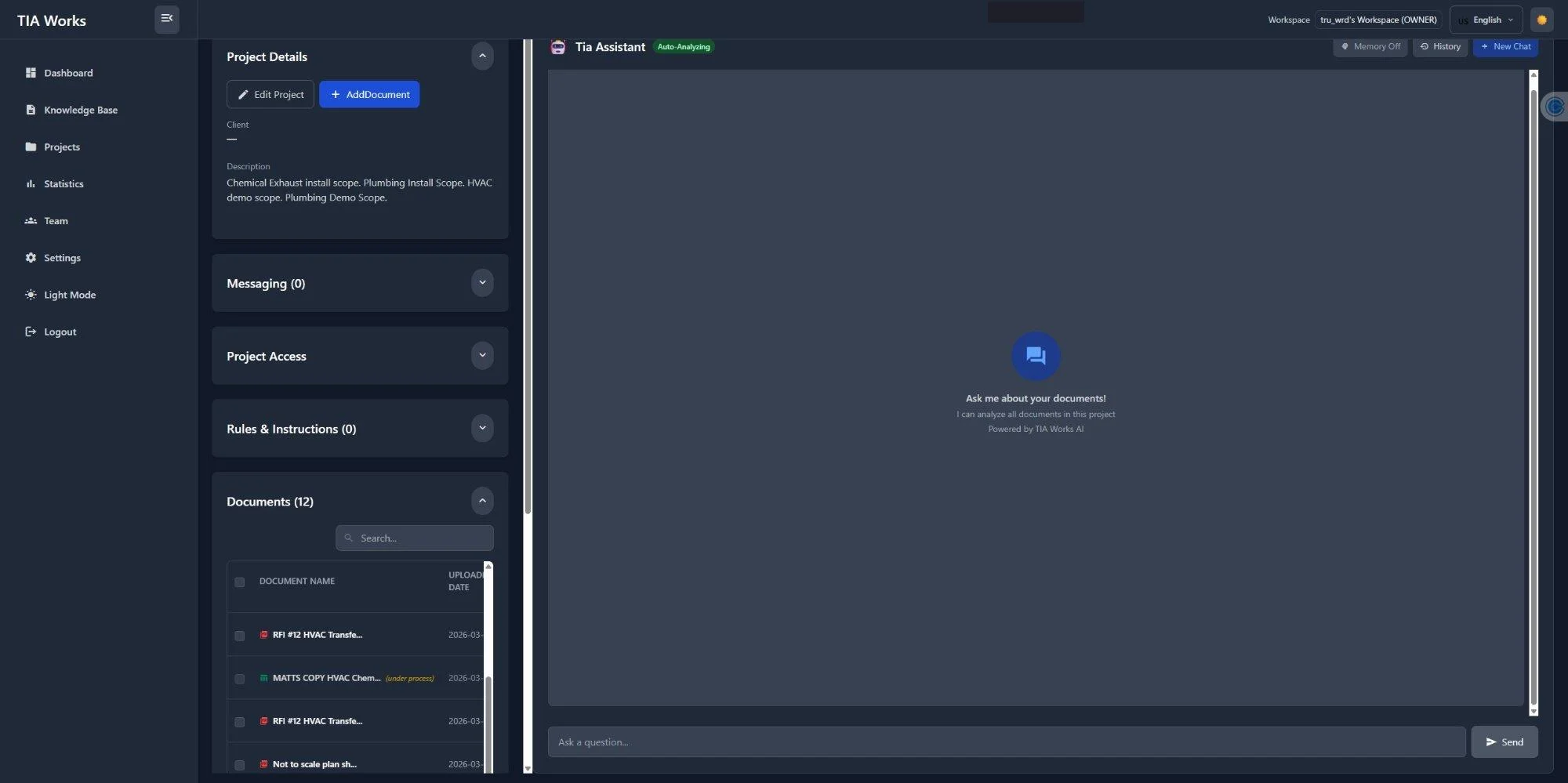
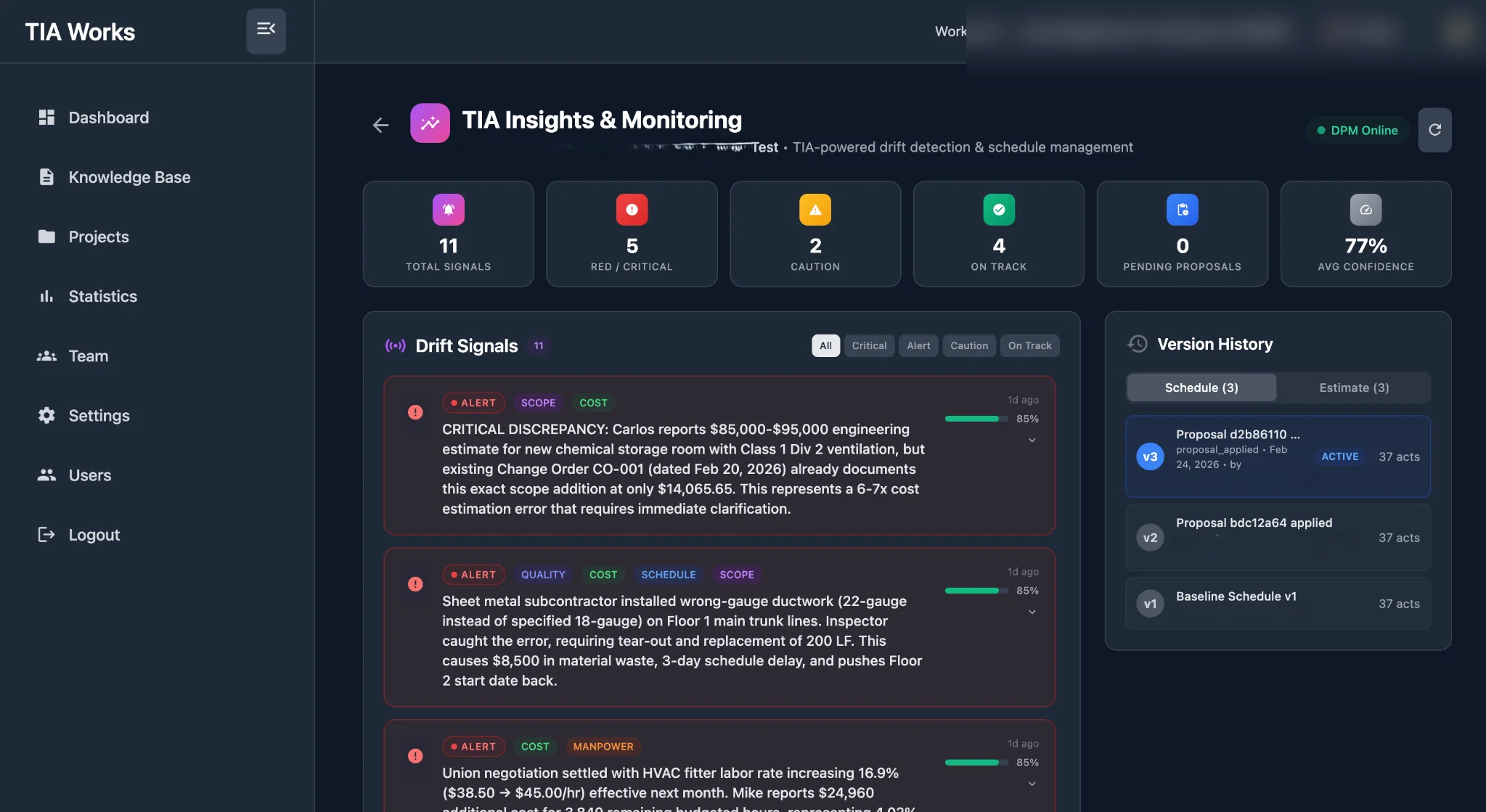
Over the weekend, DPM ran cross-scope analytics on every crew on every active job. Monday morning, you open it. Three junior crews are outperforming the senior crew on the L2 mechanical scope. Under the original projection, the senior crew was on the critical path. They had to be there. After the updated reconciliation, DPM's revised projection says they don't, not for the next three days. The junior crews are holding the pace on their own.
DPM surfaces the move. Pull the senior crew off L2 for three days. Send them to CH-08, where the upcoming route picking and layout work matches their experience exactly. Splitting the crews for three days saves 8 percent across both scopes. To cover the senior crew's seat on L2, DPM recommends pulling Darrell out of the shop to supervise the junior crews. He matches the scope, and he's available starting tomorrow.

A decision like this used to take a senior ops review, a stack of timesheets, and three weeks of data the field never had time to compile. DPM ran it overnight. Eight percent on both scopes, recovered before Monday morning coffee.
You sit down at your desk to check the margin dashboard. DPM has been scanning every document on the job, meeting minutes, change orders, daily logs, purchase orders, looking for money you're owed but haven't billed.

That $47K was hiding in a meeting minute from three weeks ago. Nobody had time to cross-reference it against the change order log. DPM does. Every day. On every job.
You just hired a superintendent for the Level 4 build-out. They need access to field data, daily logs, and crew schedules, but not contracts, billing, or margin reports. You open DPM's team panel and send an invite.

No IT tickets. No software installs. No six-week onboarding. You send a link. They click it. They see exactly what their role needs, nothing more. You control access with one screen.
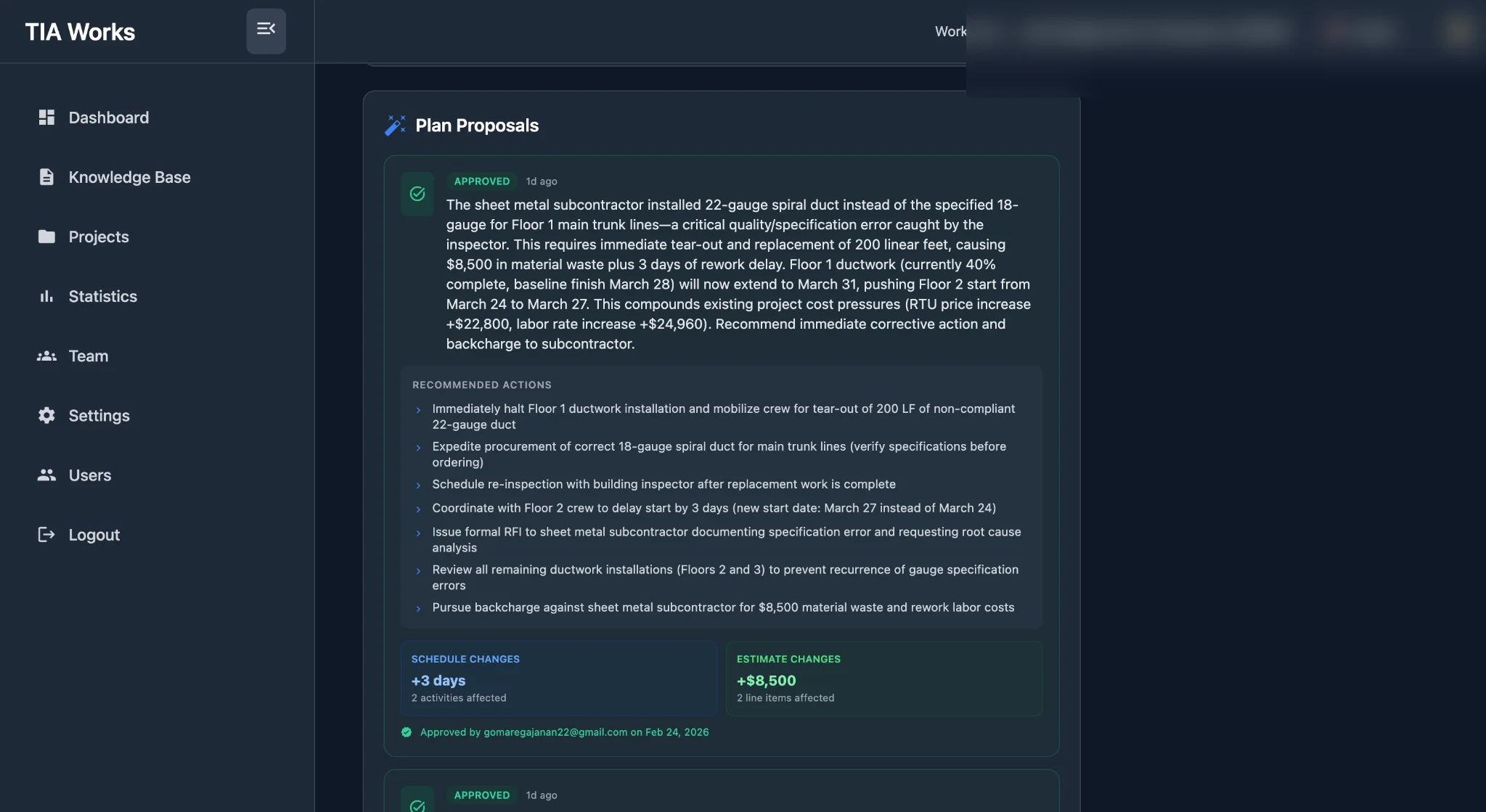
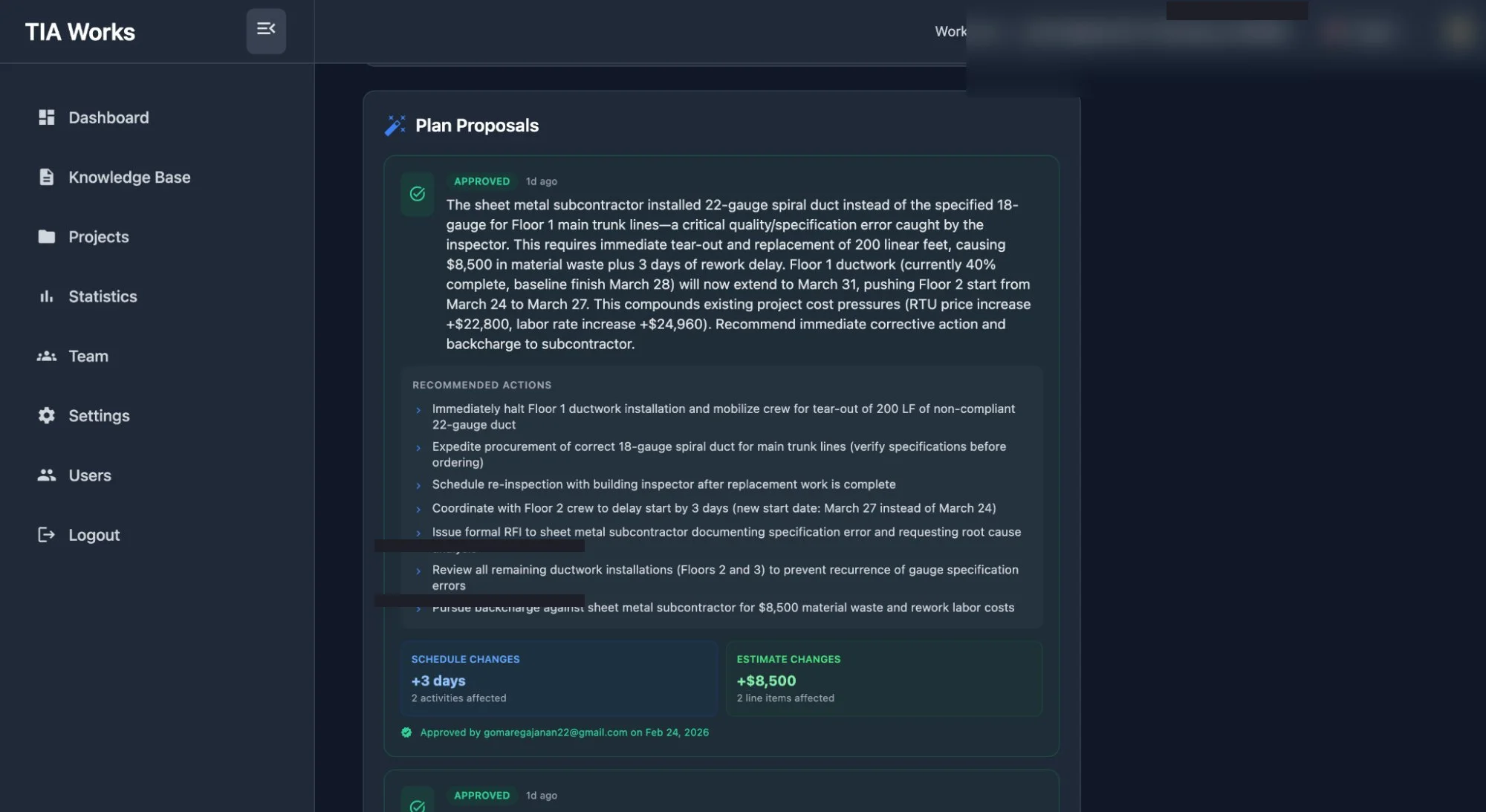
End of the day. Rick messages DPM from the field, looking for the floor drains for the commissary. He's the third team member to ask about those drains today. DPM and TIA flag the pattern as a possible drift event and alert the leadership team. Carl follows up with a photo from the dock: four pallets stamped FD with carriers. As TIA scans the image, she sees what nobody else has yet. The drains have trap primer connections.
DPM checks the specs. There's an approved RFI on this scope. The project is not installing trap primers. It's using trap guards. The pallets on the dock are the wrong drains. TIA drafts two emails on the spot, one to the shop procurement team, one to Win Supply, and holds them for your sign-off. Nick at Win Supply responds within the hour. They have the right drains in stock, and the wrong ones can go back for credit.

Without DPM, those four pallets get rolled onto the lift tomorrow morning. The crew installs. A junior PM from the GC walks by on inspection, catches the mismatch, and calls it out. Now you have two bad options: rip the drains out and rework, or install the trap primers the original drawings called for, more material and more labor than the trap guards you planned on. The credit on the return isn't the save. The rework you didn't have to do is.
One conversation with our team. We'll show you how DPM handles your actual project documents, not a demo dataset.
Apply for Beta Access